Uncategorized
Does the world really need another PDF report?
If you’re in government or academia you have surely seen reports that sit on shelves and do nothing once they’ve been compiled. You may even have helped to produce them. They often cost a lot yet yield very little. At the other end of the information delivery spectrum are powerful, dynamically adjustable web dashboards and interfaces that can often be adapted as needed, but those don’t give us recommendations nor allow us to answer deeper questions. Often what is really needed lies somewhere in between.
Consider your normal report deliverable – a PDF. Perhaps you get to provide input for a round of error checking and review once it’s completed, otherwise your only gain as a client is a static document.
Quite often once a consultants report is delivered we realize we should have asked different questions, required more detail in certain areas and more context behind certain explanations, and maybe some things were just not relevant in the end. By then we’re stuck with what we paid for, useful or not. The fact that it’s 2013 and we’re still thinking in static deliverables and ‘final’ anythings should be astonishing. How can we be smarter about data?
1. Don’t ask for a report. This assumes that you know everything you will need to know up front, which is often false. A static report cannot adapt when you realize you asked the wrong question, when you need to dig deeper into a single issue or data set.
2. Evolve. Consider the flow of information needed for a community planning process- a single dense report up front is simply a huge chunk of information that most people will ignore and most cannot absorb. Ask for data vignets or factsheets on certain aspects that can be delivered along the process timeline to meet needs as they evolve. As your understanding of data needs changes along a process, your data team must be there to support you at each stage.
3. Don’t silo or isolate your data folks –read more
4. Iterate. Instead of final delivery and review, adopt a more collaborative approach with your data team. Sit down and brainstorm the direction and details as they form. Waiting for the final version means you’re stuck with it. You often discover that you need to dig deeper with a specific indicator, or that you need to dis-aggregate to get to the real important stuff. This can’t happen at the end of a report process. Require your staff or consultants to plan for and provide multi-stage reviews. This way the data geeks can get strong guidance from you, and you can better understand the process of getting and analyzing data.
5. Own your data. or better yet, open your data. When you pay for a report you get just that, pages, in a PDF. As we encourage more government agencies to open their data for use by all, we need to do the same in our sector. When you contract for a report or research support, require the real data to come with it. That way you’re not locked into using the data just how the consultant prepares it; you can manipulate it any way you need. If you’re a nonprofit or a government agency, you should be considering opening the data for public use. You’ve paid for it, the hard work is done, now you can provide an amazing resource to your community and your stakeholders by publishing the data unearthed in your project. Data is the ultimate non-consumable resource! If you’ve gotten government data for your work, put it out there and make it available for others to benefit from also. We work in a far too siloed sector. Why should ten local organizations have to expend the same resources to find the same data? When government data is ubiquitous and easy to find, our work is better, smarter, cheaper.
We need to change how we think about information and about informed processes. We need to be able to learn constantly and to refine our knowledge over time. Static reports don’t allow us to do that. It’s time we wise up about what to ask for and when to ask for it. At the very least we need to be asking: “what is the actual value we get from one more PDF report?”.
Planning Camp hits Oakland
What is Planning Camp and why should you be there? It’s an unconference exploring urban planning, technology, and social change. It will be fun, inclusive and engaging!

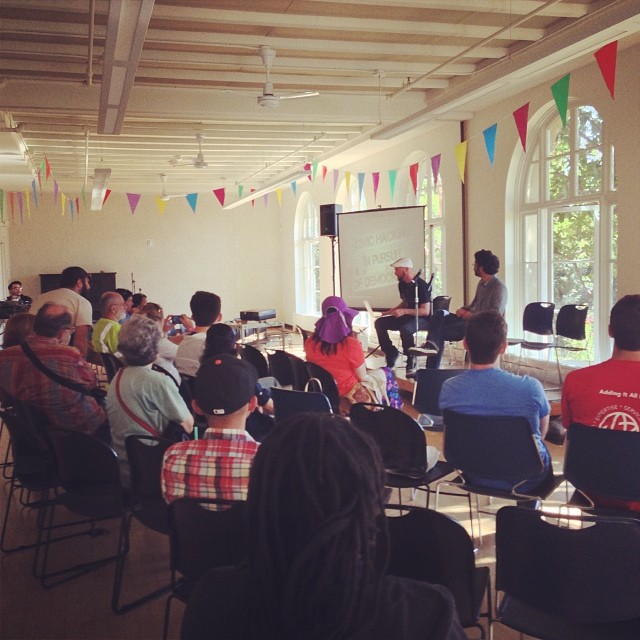
Urban Strategies Council and OpenPlans are excited to bring PlanningCamp to Oakland and the East Bay! Be there on October 12th (yes this Saturday!) if you’re working at the intersection of technology and the hard effort of making better cities – on the technology side, or the planning side, or a bit of both.
To be held at Laney College, this one day unconference is a conference where sessions are programmed and led by the attendees. Unconferences are popular in the tech world because they reflect the culture of the industry – hands-on, flexible, a little casual but very hard working. All the sessions are open for attendees to define, describe, and lead. You’ll find the format to be energizing and entertaining.
Join us and spend a day in sessions led by your peers, exploring new and old challenges. Whether you’re thinking about the role technology in public involvement, increasing equity, modeling, analysis, community organizing, at local to regional scales, PlanningCamp will be an opportunity to go deep into conversations and form new connections.
Here are a few of the sessions form the NYC PlanningCamp to whet your appetite:
-
NACTO urban street design guide: How do we change the DNA of city streets?
-
Gentrification of the waterfront after Sandy in Nook.
-
Digital Deserts (infrastructure + adoption + literacy)
-
Participatory Budgeting: how can we keep the bad ideas out?
-
How can technology build social capital and economic opportunities for low income communities? (brainstorm)
-
Lost in Translation—>tools to increase participation among immigrant communities
-
Carshare & self driving cars: How do we repurpose the street?
-
Measuring the Quality of Bicycle Infrastructure.

PlanningCamp Bay Area will take place at Laney College in the Forum Building, close
to E 10th St. We’re just a block away from the Lake Merritt BART, close to AC Transit bus lines, and totally accessible by bike.

Keawakapu beach misty tide on Flickr.
After almost 10 months of waiting to process this series, I’ve finally published what turned out to be my favorite landscape image of the past 12 months, hope you enjoy it also. If you love it enough to want it, it will be available as a fine art print in large sizes and also in modern canvas prints starting at 20×30 inches.
The incredible agency of #opendata
The way we phrase our conceptions is both a simple thing and a complex, layered thing. I’m spending today at CITRIS for a conference of leaders, practitioners and vendors focused on the topic of:
Can “Open Data” Improve Democratic Governance?
This questions is proposed frequently amongst the circles pushing for open data from our governments. But I think we’re making a mistake at the outset, we’re assigning agency to a lifeless, purely digital concept. We need to be smarter than this.
Can Open Data do anything, let alone improve democratic governance?
Hell No.
Open Data can not do anything as it’s just data, numbers, whatever, sitting lifelessly on a sever in the magical cloud somewhere.
What is actually important here? It’s in OPENING data that we do things. What is important is that governments and agencies actually OPEN their data. That act, possible through the agency of the government officials (real people who can make this decision) is what can improve democratic governance.
Let’s not get caught up in vendor speak that some inanimate thing can actually do anything. People need to open their data, and other people must animate and utilize it.
So yes, Opening Data can do much.
Scale and demand
Reading a piece on the Detroit Assessors efforts to reassess every property in the city really struck me – I don’t think this is at all unique to Detroit either, but the scale of effort required by our laws and necessary in order to support a productive, fair urban society is seriously out of wack with our local governments abilities.
Horhn said the city has 11 assessors for nearly 386,000 parcels. That’s 35,000 parcels per assessor, nearly nine times the state recommendation of 4,000.
We have a legacy of heavy state, federal and local legislation that requires different agencies to carry out specific tasks, but over time those requirements have evolved, grown (sometimes ended too) yet the funding for many agencies has not grown with the ask. Short of some incredible and super reliable innovation, there is no way on earth that this assessors workforce can ever meet their mandate. This is one more case of the requirements never being met and the result is obviously not good for the city of Detroit. As government slowly becomes more open, more such situations will be discovered, forcing us to ask more difficult questions about the way we do things, the expectations and the layered regulations that impact us on the local level.
Somewhat like the issues Oakland faces with a heavily reduced police force (in large part budget related) and increasing crime. There’s no way to do this without being smarter, much smarter. I’m not going to suggest that technology is the solution, but I’m sure that there are smarter ways to do things that do use technology, people and processes better!
Oakland Unseen: Oakland teen can’t stop quoting Drake
This trend started from the bottom of Oakland and now it’s here in North Oakland and Berkeley. When Oakland Unseen asked Jamal if he got it from his old friends in East Oakland, he replied “No, new friends.” Asked if he likes living in Alameda County, he replied, “Yolo,” which we can…

No, dear. That is not at all what I meant. I detest male-bashing. I meant equal pay for equal work & that means for men as well as women. I mean everyone, men and women, should have reproductive rights. Feminism could have been the great equalizer, but it was hijacked and misrepresented by so many men and women, it’s become a derogatory term. I’m proud to be a feminist. I’m not proud of the women and men who think feminism is a license to be abusive towards men.
From MissBerk.com
respect

Day 1 of Hummingbird project on Flickr.
Next in the favs of my hummingbird project! Mid-air hover time. #birdsinflight #nature @spikeshoots

Day 1 of Hummingbird project on Flickr.
Housewarming gift turned out to be a double whammy! Set up the feeder yesterday and hoped- haven’t seen many birds in our new area, not sure if it’s the location, our second floor height or the lack of flower gardens in the area. But today has been crazy with hummingbirds. A family of three are fighting and drinking all day long. Good times.
 Steve Spiker